Why Slate and Tile Roofing Remains a Top Choice for South West London Homes
Understanding the Appeal of Natural Materials in Roofing
Living in South West London, you see a real mix of roof types. From the Victorian terraces in Hammersmith to the more modern builds out towards Richmond, the roof covering says a lot about a property's age and character. I have worked on roofs across this area for well over a decade, and one thing I keep coming back to is how well slate and tile roofing suits our local architecture. It is not just about looks, though that matters. It is about longevity, about how the material performs in our specific climate, and about the craftsmanship required to fit it properly. A roof is a long-term investment, and choosing the right system from the start, or when replacing an old one, makes all the difference.
Many homeowners ask me whether they should stick with the original material or switch to something newer. The honest answer is that it depends on the building. But for period properties, and even for many contemporary designs, the combination of slate and clay or concrete tiles offers a balance of durability and aesthetic that is hard to beat. It is a system that has been refined over centuries, and when you get the details right, it can easily last fifty years or more with only basic maintenance.
The Realities of Working with Slate
Slate is a natural stone, so every piece is slightly different. That is part of its charm, but it also means the roofer needs to know what they are doing. I have used Welsh slate on several heritage jobs in Hammersmith, and there is a reason it is still the benchmark for quality. It splits cleanly, it resists frost, and it weathers to a soft grey that looks right on a Victorian villa. Spanish slate, from quarries like Pizarra, is also widely used in South West London. It is often more affordable than Welsh slate but still performs very well, provided you source it from a reputable supplier. The key with any natural slate is proper grading. You need to sort the slates on site, checking for thickness and any hidden flaws, before you even start fixing. A good roofer will do this without being asked. A less experienced one might just stack them on the roof and hope for the best, and that is where problems start.
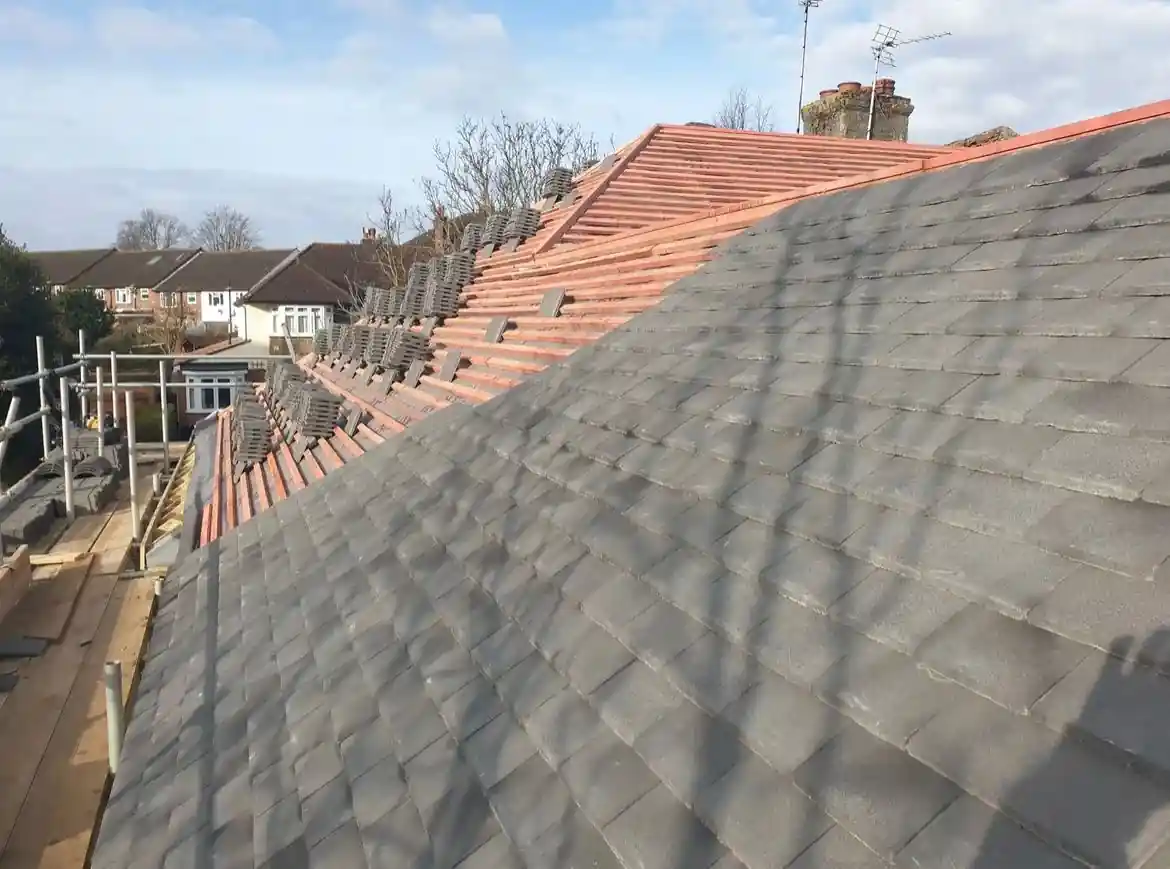
One of the most common issues I see with older slate roofs is the use of the wrong nail size or type. Copper or stainless steel nails are essential in our damp climate. Ordinary steel will rust, and within ten years you will start losing slates. The same goes for the hooks and fixings. It sounds like a small detail, but it is the difference between a roof that stays tight and one that needs constant repairs.
Why Tiles Have Their Place
Not every roof suits slate, and that is where tiles come in. Concrete tiles from manufacturers like Marley, or clay options from Sandtoft and Ketton, offer a different look and often a lower cost. I have fitted Marley Modern tiles on a lot of new-build extensions in South West London. They are consistent in size, easy to cut, and come with a good guarantee. For a straightforward replacement on a standard house, they are a sensible choice. But if you want something with more character, clay tiles from Sandtoft or the Tudor slate range from Nelskamp give a roof a much warmer, more textured appearance. Tudor slate is actually a concrete interlocking tile, but it mimics the look of natural slate very well. It is popular on homes where the owner wants a traditional look without the higher cost of natural stone.
There is also the option of fibre cement slates, which were widely used from the mid-20th century. Brands like Eternit and Cembrit have been making these for decades. They are lighter than natural slate and cheaper, but they have a shorter lifespan. Many of these roofs are now reaching the end of their life, and homeowners are faced with a decision: replace like-for-like, or upgrade to natural slate or tile. In many cases, asbestos cement replacement is the main reason people call us. The old asbestos cement slates need careful removal and disposal, and then we fit a modern alternative. SwissPearl slates are a high-performance option for this kind of replacement. They are a fibre cement product but with much better durability than the old ones. They look clean and crisp, and they are a good middle ground between cost and longevity.
Getting the System Right: More Than Just the Covering
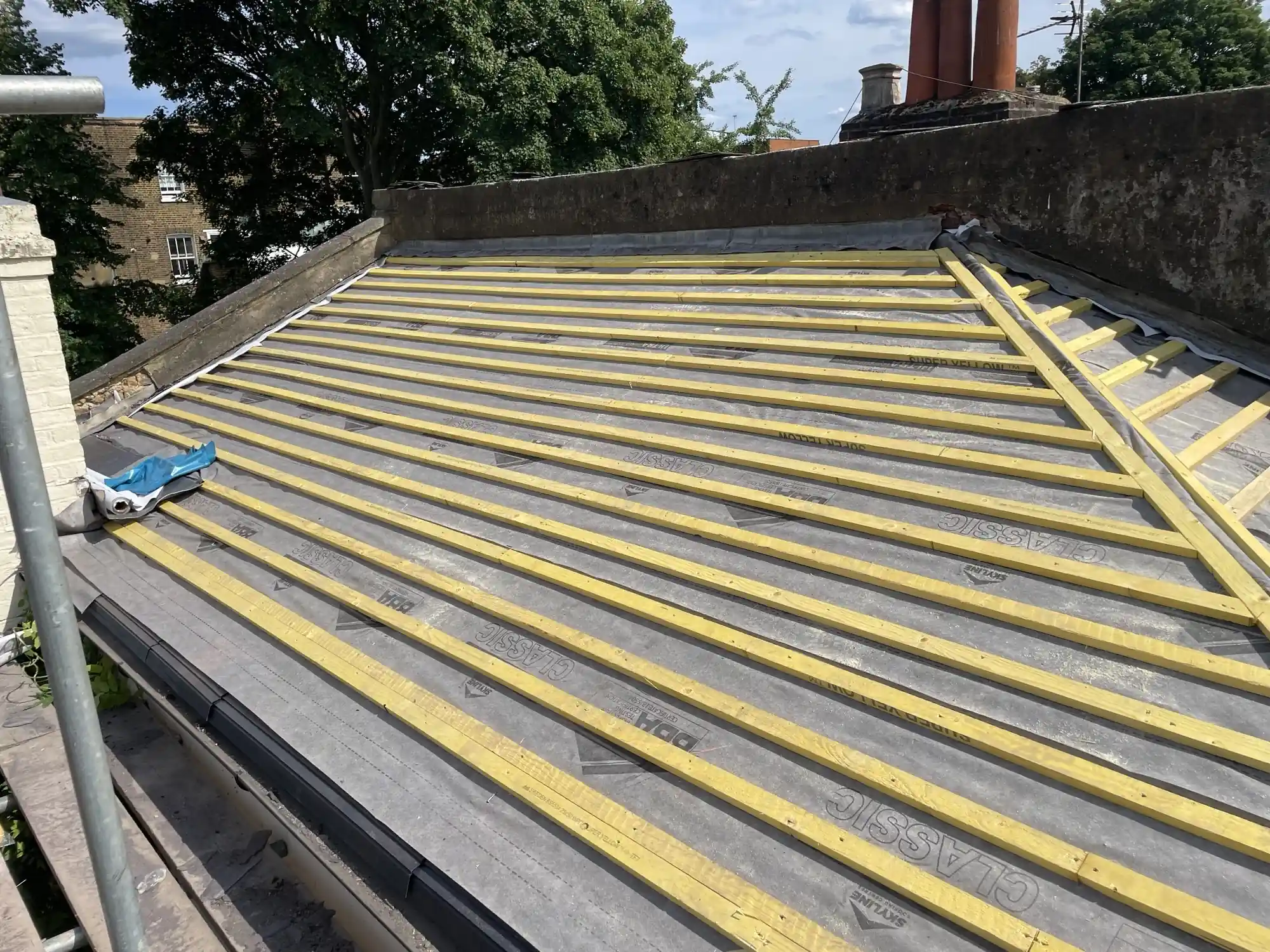
Too many people focus only on the visible slates or tiles and forget about what goes underneath. The tile underlay is critical. A good breathable underlay, properly lapped and taped at the joints, keeps the roof deck dry and allows any condensation to escape. I have seen roofs where the underlay was cheap, non-breathable material, and within five years the rafters were damp and starting to rot. That is an expensive fix. The underlay also needs to be supported properly, with counter battens to create a ventilation gap. Roof ventilation is not an optional extra. It stops the timbers sweating and keeps insulation in the loft performing as it should. Without adequate ventilation, you can get condensation problems that lead to mould and decay, even on a brand new roof.
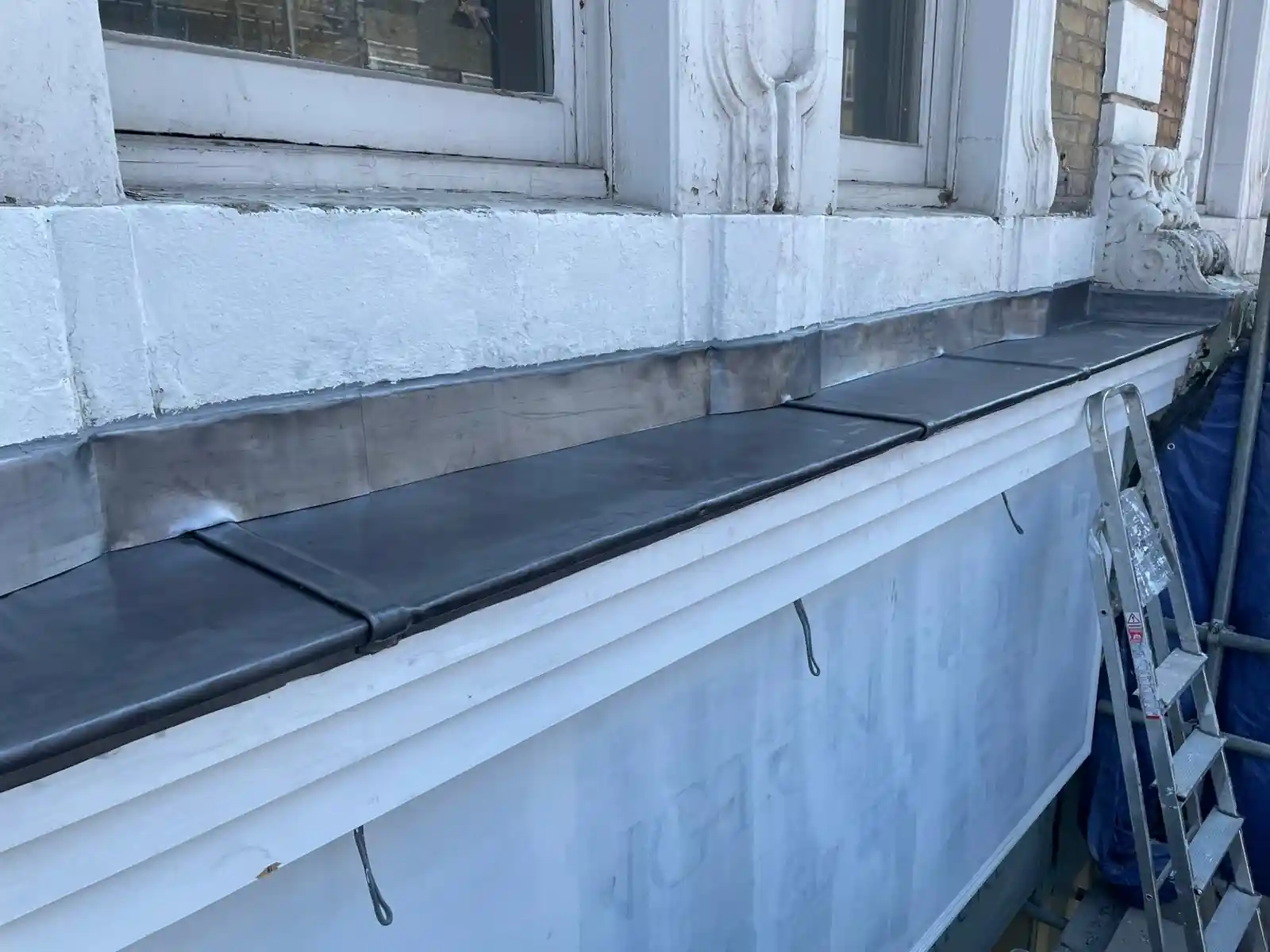
Another detail that often gets overlooked is the choice of ridge tiles and fittings. On a slate and tile roofing system, the ridges and hips need to be weathered properly. I prefer dry ridge systems from manufacturers like Marley or Nelskamp. They use a mechanical fixing and a special clip, so there is no need for mortar. Mortar ridges crack over time, and then water gets in. A dry ridge system moves with the roof and stays watertight for much longer. It costs a bit more upfront, but it saves trouble down the line.
Working with a Trusted Contractor
Because roofing is a specialist trade, and because the consequences of a bad job are so serious, it pays to use a contractor who knows what they are doing. I am a member of the National Federation of Roofing Contractors, and that membership gives me access to technical updates and training that I would not get otherwise. It also gives the customer some protection. If something goes wrong, there is a body to appeal to. But more than that, it is about having someone on site who understands the materials. For example, when we specify a slate and tile roofing system, we need to check the pitch of the roof. Slate needs a minimum pitch to shed water properly, and tiles have their own requirements. If the pitch is too shallow for the chosen material, you will get leaks, no matter how well the slates or tiles are fixed. A good roofer will spot this before they start and recommend the right product for the slope.
In South West London, we also have to deal with planning restrictions, especially in conservation areas. Hammersmith has several conservation zones, and the council often requires that any new roof matches the original material in colour and texture. That is where knowing suppliers like Hepworth and Ritma matters. They produce fittings and accessories that match the older styles. If you try to fit a modern concrete tile on a Victorian terrace, it will stick out and the planners will likely reject it. Using a reclaimed slate or a matching clay tile from Sandtoft keeps the street scene intact and gets the job approved faster.
Making the Right Choice for Your Property
At the end of the day, the best roofing material is the one that suits your building, your budget, and your local climate. For many homes in South West London, slate and tile roofing remains the standard because it works. It handles our wet winters, it looks right on both old and new buildings, and it can be repaired easily when damage occurs. A cracked tile can be replaced in an hour. A slipped slate can be refixed without disturbing the rest of the roof. That kind of repairability is hard to beat with some modern single-ply systems.
If you are planning a roof replacement, talk to a few contractors. Ask them what they recommend and why. Look for someone who carries a range of samples from Marley, Eternit, Cembrit, and the other manufacturers. Someone who can explain the difference between a clay tile and a concrete one, and who can show you examples of their work. A good roofer will not try to push you into a material that is wrong for your house. They will listen to what you want and guide you towards the best option within your budget. That is the kind of service that keeps a roof sound for decades, and that is what you should be looking for.